The University of Manitoba has thrived for 140 years as a place where students come to learn, be inspired and find their voice. We are Manitoba’s largest, most comprehensive university and its only research-intensive post-secondary institution. Our research facilities foster collaboration and scholarship in areas including Arctic system science and climate change; immunity, inflammation and infectious disease; population and global health; culture and creative works; and Indigenous research.
At the U of M we are taking our place among leading universities through a commitment to transformative research and scholarship, and innovative teaching and learning, uniquely strengthened by Indigenous knowledge and perspectives.
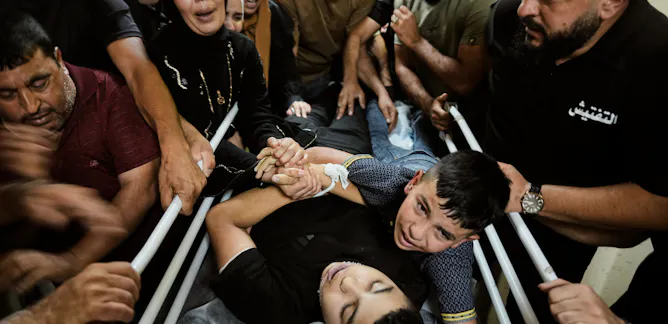
Mohammed Ajouri mourns over the body of his brother Islam Ajouri, 14, who, according to the Palestinian Ministry of Health, was killed by Israeli forces, as his body is brought to the hospital in the West Bank city of Nablus on Aug. 23, 2026.
(AP Photo/Majdi Mohammed)
The dehumanizing language used by Israeli officials reflects and enables an underlying disregard for Palestinian life that connects to the findings of the recent June 2026 UN Commission of Inquiry report.
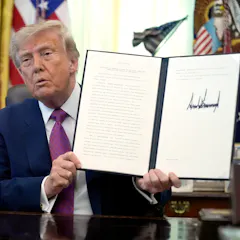
President Donald Trump holds up a signed executive order in the Oval Office of the White House on Aug. 27, 2026, in Washington, D.C.
(AP Photo/Manuel Balce Ceneta)
While many might view Trump’s renamings as comical or unserious, for Indigenous communities, they are reminiscent of centuries of settler-colonial erasure.
Uncertainty is inherent in science, but communicating it effectively requires more than explaining how much error is present in graphs.
Tom Werner/DigitalVision via Getty Images
Uncertainty is part of the scientific process, and it’s not a bad thing – it’s where future discoveries can happen.
A Vancouver Police officer wears a body camera in June 2026. The public cannot opt out of interactions with police when their images, voices and personal information may be captured on body cameras and fed into AI.
THE CANADIAN PRESS/Darryl Dyck
Growing concerns about police use of AI could erode the public’s perception of trust in the legal system.
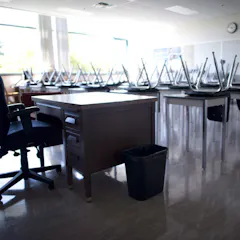
Alberta’s education minister has said changes to education legislation are designed to uphold neutrality, and make it clear that “politics and ideology have no place in Alberta classrooms.”
THE CANADIAN PRESS/Jonathan Hayward
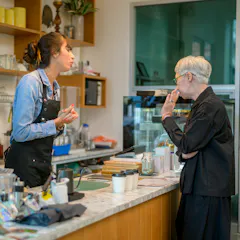
Front-line workers have little control over how customers treat them. New research on taxi drivers points to a simple coping habit.
New research suggests that both health-care providers and parents alike share that there often isn’t enough evidence to make an informed decision.
(Unsplash/Bermix Studio)
When parents stop a medication they need or interrupt breastfeeding earlier than intended, the impact affects both mother and child. We need better evidence and decision support.
Guns for hire are on the increase in Canada. Motives for a crime may be split among the shooter, recruiter, payer, ideological ecosystem and sometimes a foreign or transnational criminal sponsor.
(Max Kleinen/Unsplash)
When runners ‘hit the wall,’ they experience sudden debilitating fatigue, difficulty keeping pace, and often, a shift away from their goal pace towards surviving until the finish line.
A London Police vehicle in London, Ont., in April 2025.
THE CANADIAN PRESS/Nicole Osborne
Three provinces have passed laws that make it easier for governments to withhold, delay or dismiss requests for public records — and Ottawa may be next.
When at least one company in an industry receives a hostile takeover bid, rivals increase their ESG investment by between 3.6 and 6.1 per cent, according to a new study.
(Unsplash)
Companies facing hostile takeover threats invest more in environmental, social and governance initiatives, and the effect spreads to their competitors.
A person looks out of a window as police respond to a shooting in the Côte-des-Neiges district of Montréal on June 22, 2026.
THE CANADIAN PRESS/Christopher Katsarov
Countering violent extremism requires substantial investment from all levels of government, dismantling the state’s racialized assumptions of criminality and recognizing that gendered violence is systemic.
Serbian Army soldiers and personnel from NATO countries perform during the first Serbia-NATO joint military exercise at training ground near the village of Borovac, south Serbia, on May 22, 2026.
(AP Photo/Jelena Djukic-Pejic)
NATO is moving toward a broader approach to deterrence and defence — one that reflects elements of the ‘pan-domain’ thinking that Canada is championing.
The Canadian flag blows on the Peace Tower on Parliament Hill in Ottawa on May 26, 2026.
THE CANADIAN PRESS/Sean Kilpatrick
In 2027, Canadians 18 years and older with mental illness who are deemed to meet age and other eligibility criteria could potentially access doctor-assisted death in Canada.
In an inherently social profession, teachers are paradoxically lonely, isolated and strapped for time to collaborate.
THE CANADIAN PRESS/Nathan Denette
We need to reduce workplace isolation to support teachers’ collegial capacity to mitigate loneliness, bolster engagement and contribute toward more equitable school environments.
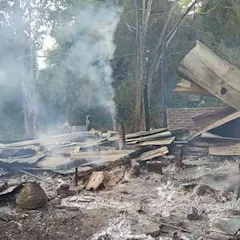
Smoke rises from debris and corrugated roofing of a school that was burned to the ground in Taung Myint village in Myanmar in October 2022 during an intensification of fighting in the country’s civil war.
(AP Photo)
The war in Myanmar draws far less western attention than Ukraine or the Middle East. Why is such an enduring and intractable conflict being treated with so little urgency?
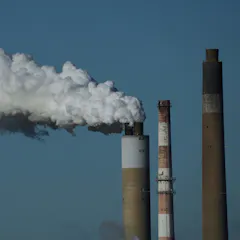
The unequal environmental burden of global trade is often hidden. A coal-powered generating station, operates in April 2025, in Newburgh, Ind.
(AP Photo/Joshua A. Bickel)
Environmental impacts are often overlooked in supply chain debates. A new framework shows how businesses can respond more fairly and effectively.
With technology streamlining our lives, many report growing levels of depression, anxiety and existential dread brought on by the physical and emotional distance it creates between us.
(Unsplash)
Technology is intensifying isolation, and recognizing our shared human struggles — or common humanity — is a practical, evidence-based way to reconnect.
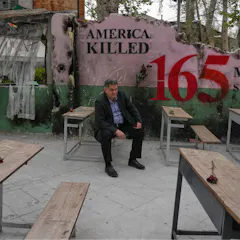
A man in northern Tehran sits on a bench on April 12, 2026, at a memorial honouring schoolchildren killed during a U.S. strike on a school in the southern town of Minab a few weeks earlier.
(AP Photo/Vahid Salemi)
For a country that built the post-1945 rules-based order, the United States now needs to be rescued from its own war by the very nations it once lectured on governance and peace.