Have you ever noticed your dog behaving in ways that don’t make sense? Maybe they sniff the ground instead of playing with another dog or shake their body when they aren’t wet. Although these behaviors can be subtle, we often wonder if our dog is confused or missing the point. However, these out-of-context actions, known as displacement behaviors, are a valuable window into your dog’s state of mind.
What Is Displacement Behavior?
Displacement behavior is simply natural, everyday dog behavior displayed out of context. For example, your dog might look away from an approaching stranger even though there’s nothing there to see.
According to Rachel Lane, M.Sc., CPDT-KA, CBCC-KA, owner of Leash and Learn Dog Training, “To an observer, displacement behaviors may appear random because they are unrelated to the current situation. Additionally, displacement behaviors are sometimes hard to identify because they are normal dog behaviors like itching, yawning, and sniffing.”

Why Dogs Perform Displacement Behaviors
Why do dogs engage in these behaviors if they don’t match the situation? Likely because they feel uncertain or in conflict. They might want to do two behaviors at the same time and aren’t sure which to choose. Or they might feel a mix of emotions, such as excitement to meet a new dog, coupled with anxiety about how the greeting will go. Lane calls displacement behavior a coping skill and says it can also occur when the dog feels scared, anxious, frustrated, or over-aroused.
She says they may also function as a form of communication. “Your dog may be performing displacement behaviors to communicate to others that they do not want to interact—’Sorry, I can’t say hi, I’m so busy sniffing over here!’—or to communicate that they intend to avoid any sort of aggressive interaction.”
Dog trainers and scientists have also hypothesized that displacement behaviors might act as appeasement signals, behaviors used to de-escalate aggression. However, a study in the journal Applied Sciences found that dogs didn’t use displacement behaviors to interrupt threatening behavior. Rather, they were performed in ambiguous contexts when the behavior of another dog or person was difficult to predict. Further research into how and why dogs use these behaviors will provide better insight into our dog’s’ intentions.
How to Recognize Displacement Behavior
Displacement behavior can occur in a wide variety of situations, including dog-dog interactions or those between dogs and people. They can also be self-directed or directed at the environment. Some examples of self-directed displacement behaviors include:
- Itching
- Licking or grooming the body
- Yawning
- Lip licking or nose licking
- Shaking the body as if after a bath
- Lifting a front paw
- Turning the head
A common environmentally-focused displacement behavior is sniffing the environment. For example, many dogs spend their first few sessions of dog training class sniffing the ground rather than engaging with their owner. Although you might think it’s due to crumbs on the ground from the previous class, it’s more likely that your dog is unsure about all the new people and dogs. Lane mentions other environmental behaviors too, such as when a dog seems obsessed with a ball or toy, or when they urinate or mark during a social opportunity to avoid an interaction.
When it comes to recognizing displacement behavior, Lane says context matters. You can’t just see the behavior and label it as displacement. Instead, she recommends observing your dog’s body language, overall behavior, and their environment. “For example, sometimes a dog is itching because they are itchy, but other times their itching functions as a displacement behavior. You cannot rely on itching alone to tell you if your dog is stressed;, you also need to consider the context in which the itching is occurring.”
Why You Should Watch for Displacement Behavior
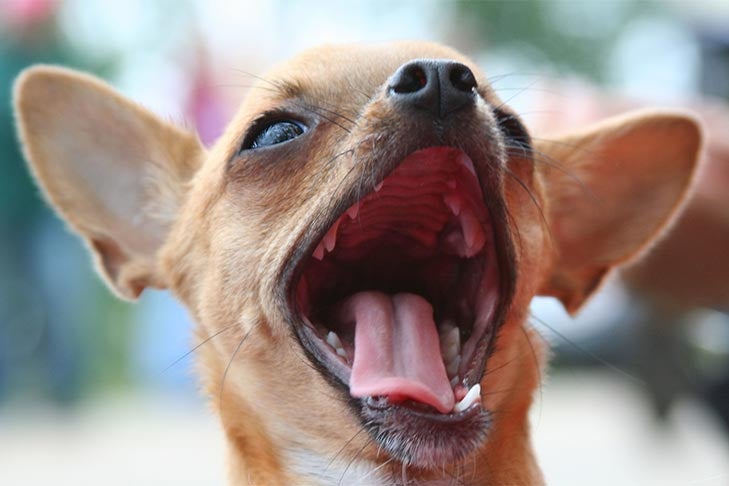
Lane says we can use displacement behaviors to monitor our dog’s emotional state. And that will help reduce stress, prevent aggression, and improve our dogs’ quality of life. “Recognizing the presence of displacement behaviors lets dog guardians help their dog exit a stressful situation before the dog escalates to aggressive behaviors such as lunging, snapping, and/or biting. It also empowers owners to implement environmental management and behavior modification exercises to reduce the dog’s stress, fear, and/or arousal levels when exposed to the triggering stimuli.”
What to Do When You See Displacement Behavior
Lane advises never punishing or correcting your dog’s displacement behavior. Instead, allow them to perform it. Remember, these are important coping skills and a normal part of dog behavior. Take note of the stimulus that triggered it, then support your dog in the moment.
Support might mean removing your dog from the situation, such as leaving a busy pet store. You could also remove the stressful stimulus from your dog’s environment, such as walking away from an approaching stranger. Or you could reduce the intensity of the stimulus, such as increasing the distance between your dog and another dog. And once the moment has passed, work on behavioral modification, such as desensitization and counterconditioning, to create positive associations with the triggering stimulus.
Also, note how often your dog performs these behaviors and how long each lasts. Does your dog bounce back quickly, or are the displacement behaviors chronic? If you notice them happening more often or more intensely, or if your dog is following the displacement behavior with displays of aggression, Lane says it’s time to reach out to a professional dog trainer or behavioral consultant to help your dog find better ways to cope.