In the executive suite, the term 'AI' is everywhere. It promises unprecedented efficiency, productivity, and a competitive edge.
Yet, for many Chief Technology Officers and VPs of Engineering, the reality of implementing AI in software development often falls short of the hype. It's frequently relegated to a supercharged autocomplete, a faster way to perform old tasks. This is a colossal missed opportunity.
The true transformative power of AI isn't just about writing code faster; it's about fundamentally changing how we solve problems.
It's about moving from AI-assisted efficiency to AI-driven innovation. This article provides a strategic framework for technology leaders to harness AI not as a mere tool, but as a co-pilot for genuine innovation across the entire software development lifecycle.
We'll explore how to transcend simple automation and use AI to build smarter, more resilient, and market-defining products.
Key Takeaways
- 💡 Strategic Shift Required: The greatest value from AI in software development comes not from simply automating existing tasks (AI-assisted), but from fundamentally redesigning workflows and processes to solve problems in new ways (AI-driven).
According to McKinsey, redesigning workflows has the biggest effect on an organization's ability to see a tangible impact on EBIT from its use of generative AI.
- 🔄 Full Lifecycle Integration: To unlock innovation, AI must be integrated across all six phases of the Software Development Life Cycle (SDLC), from initial ideation and requirements analysis to proactive maintenance and self-healing systems, not just in the coding phase.
- 📈 Focus on Business Outcomes: While AI can boost developer productivity by 30-50%, the ultimate goal is business innovation.
This means using AI to create hyper-personalized user experiences, develop predictive features, and accelerate time-to-market for new revenue streams.
- 🤝 Team & Culture are Key: Adopting AI successfully requires more than just technology.
It demands a leadership mandate for experimentation, a clear strategy for upskilling or augmenting your team with expert talent, and establishing strong ethical guardrails for responsible AI implementation.
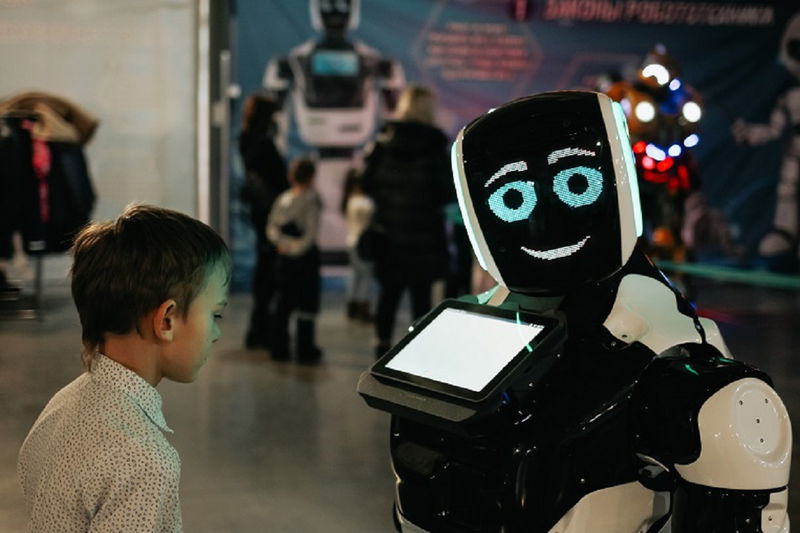
Beyond the Hype: Moving from AI-Assisted to AI-Driven Development
The most common pitfall for organizations is viewing AI as a simple productivity hack. Tools like GitHub Copilot are revolutionary, but if they're only used to write the same code faster, you're merely optimizing the status quo.
The real paradigm shift occurs when you empower AI to influence strategy, architecture, and user experience. This is the crucial difference between being AI-assisted and becoming truly AI-driven.
The Pitfall: Using AI as a Faster Typewriter
An AI-assisted approach focuses on micro-optimizations: generating boilerplate code, suggesting bug fixes, or writing unit tests.
While valuable, these actions are tactical. They make individual developers more efficient but don't necessarily lead to a more innovative product. It's a linear improvement on an existing process.
The Goal: Using AI as a Strategic Co-Pilot for Innovation
An AI-driven approach is strategic. It uses AI to explore possibilities that were previously impractical or impossible.
It involves asking bigger questions: Can AI analyze market data to suggest a new feature set? Can it simulate user behavior to identify design flaws before a single line of code is written? Can it predict future infrastructure bottlenecks based on current usage patterns? This approach creates exponential value.
| Aspect | 🤖 AI-Assisted (Tactical Efficiency) | 🚀 AI-Driven (Strategic Innovation) |
|---|---|---|
| Primary Goal | Increase developer productivity and speed. | Enhance product value and create new capabilities. |
| Core Function | Code generation, completion, and debugging. | Problem discovery, solution modeling, and predictive analysis. |
| Scope of Impact | Individual tasks and code snippets. | Entire workflows, product architecture, and business strategy. |
| Example | Using an AI tool to write a sorting algorithm faster. | Using an AI model to determine the optimal user journey for a new feature. |
Is Your Development Process Stuck in the Past?
Simply making developers faster isn't enough to win in today's market. True innovation requires a strategic partner who understands how to weave AI into the fabric of your entire development lifecycle.
Discover how Coders.Dev's AI-augmented teams can drive real innovation.
Book a Free ConsultationA Practical Framework: Integrating AI Across the Entire Software Development Lifecycle
Innovation doesn't happen in a vacuum-or just in the coding phase. To truly leverage AI, it must be embedded as an intelligent layer across the complete Understanding Software Development Life Cycle (SDLC).
Here's a phase-by-phase blueprint for implementation:
🧠 Phase 1: AI-Powered Ideation and Requirement Analysis
Before you write any code, AI can provide a massive competitive advantage. Large Language Models (LLMs) can analyze competitor reviews, customer support tickets, and market trend reports to identify user pain points and unmet needs.
This data-driven approach replaces guesswork with validated insights, ensuring you're building what the market actually wants.
📐 Phase 2: Intelligent Design and Prototyping
AI tools can generate multiple UI/UX mockups based on simple text prompts, allowing product teams to visualize and iterate on ideas at lightning speed.
Furthermore, AI can simulate user interaction with these prototypes, predicting potential usability issues and optimizing workflows before committing expensive engineering resources.
💻 Phase 3: Generative AI in Coding and Implementation
This is where tools like code assistants shine. Beyond generating code, AI can translate legacy code into modern languages, enforce coding standards, and suggest architectural improvements.
For specialized projects, such as those involving complex algorithms, AI can be a powerful partner in Python Software Development, accelerating the creation of sophisticated machine learning models.
🐞 Phase 4: Predictive Testing and AI-Accelerated QA
Traditional quality assurance is reactive. AI-powered QA is predictive. By analyzing historical bug data, AI can predict which parts of the codebase are most likely to contain new defects, allowing QA teams to focus their efforts strategically.
AI can also automatically generate comprehensive test cases, including edge cases that human testers might miss, dramatically improving software quality and resilience. This modernizes practices beyond traditional tools discussed in guides like How And When To Use Selenium Testing Software.
🚀 Phase 5: Automated Deployment and Intelligent Monitoring (AIOps)
In the deployment phase, AI optimizes CI/CD pipelines by predicting the risk of a new release and automating rollback procedures if anomalies are detected.
Post-deployment, AIOps platforms use machine learning to monitor application performance, distinguish critical alerts from noise, and identify the root cause of issues in real-time.
🔧 Phase 6: Proactive Maintenance and Self-Healing Systems
The final frontier is creating systems that maintain themselves. AI can analyze performance logs to predict future hardware failures or scaling needs, allowing for proactive intervention.
In advanced scenarios, AI can trigger automated responses to resolve issues without any human involvement, leading to self-healing infrastructure that maximizes uptime and reliability.
Building Your AI-Ready Team: Strategy, Skills, and Culture
Technology is only half the equation. To successfully integrate AI, you must cultivate an environment where innovation can flourish.
This involves a deliberate approach to leadership, talent, and governance.
The Leadership Mandate: Fostering a Culture of Experimentation
AI adoption cannot be a grassroots-only effort. It requires a top-down mandate that encourages experimentation and accepts that not every initiative will succeed.
Leaders must allocate resources for AI tools and training, and more importantly, create psychological safety for teams to try new, AI-driven approaches. Effective management is crucial, as detailed in our guide on How To Manage A Software Development Team For Success.
Upskilling vs. Augmenting: When to Train and When to Hire
The demand for AI expertise far outstrips supply. You face a critical choice: upskill your current team or augment it with external experts.
While internal training is vital for long-term growth, staff augmentation provides immediate access to specialized skills, accelerating your AI initiatives without a lengthy hiring process. This hybrid approach often yields the best results, blending institutional knowledge with cutting-edge expertise. If you choose to hire, our How To Hire A Software Developer Ultimate Guide can provide a comprehensive roadmap.
Ethical Guardrails: The Imperative of Responsible AI
With great power comes great responsibility. As you integrate AI, you must establish clear ethical guidelines. This includes ensuring data privacy, mitigating algorithmic bias, and maintaining transparency in how AI models make decisions.
Ignoring these aspects is not just a reputational risk; it's a fundamental business risk. Embedding The Role Of Ethics In Software Development Considerations And Challenges into your AI strategy is non-negotiable.
2025 Update: The Rise of AI Agents in Software Engineering
Looking ahead, the evolution from AI co-pilots to autonomous AI agents represents the next major leap in software development.
While co-pilots assist developers with specific tasks, AI agents are being designed to handle entire projects. These agents can take a high-level requirement, break it down into tasks, write the code, perform tests, debug issues, and deploy the application with minimal human oversight.
While this technology is still maturing, its trajectory is clear. The organizations that are building a strong foundation with AI co-pilots and AI-driven workflows today will be best positioned to leverage autonomous agents tomorrow.
The focus for leaders should be on creating the robust systems, processes, and data pipelines that will enable these future agents to operate effectively and safely within their engineering ecosystems.
Explore Our Premium Services - Give Your Business Makeover!
Conclusion: From Tool to Teammate
The narrative around AI in software development is shifting. It's no longer a question of if organizations will adopt AI, but how they will leverage it to create a durable competitive advantage.
The most forward-thinking technology leaders understand that AI is not just another tool to be added to the stack; it's a strategic partner that can redefine what's possible.
By moving beyond tactical automation and embracing an AI-driven approach across the entire SDLC, you can unlock a new echelon of innovation, building products that are not only more efficient to create but are also smarter, more adaptive, and more aligned with customer needs.
The journey requires a commitment to cultural change, strategic talent management, and responsible implementation, but the rewards-true, market-shaping innovation-are well worth the effort.
This article was written and reviewed by the Coders.dev Expert Team. With CMMI Level 5, SOC 2, and ISO 27001 certifications, Coders.dev provides AI-augmented software development teams that help businesses accelerate innovation securely and effectively.
Our expertise in integrating AI across the full technology stack empowers our clients to build the future, faster.
Related Services - You May be Intrested!
Frequently Asked Questions
What is the real ROI of using AI in software development?
The ROI of AI extends far beyond simple productivity metrics. While studies show AI can increase developer productivity by 30-50%, the true value lies in business outcomes.
These include:
- Faster Time-to-Market: Accelerating all phases of the SDLC allows you to launch new features and products ahead of the competition.
- Improved Product Quality: AI-powered testing catches more bugs and predicts potential issues, reducing costly post-release fixes and customer churn.
- Enhanced Innovation: AI enables the creation of 'smart' features like personalization engines and predictive analytics that can create new revenue streams.
- Reduced Operational Costs: AIOps and self-healing systems minimize downtime and reduce the manual effort required for system maintenance.
Our team lacks AI skills. How can we get started?
You don't need to hire an entire data science department overnight. A highly effective strategy is staff augmentation with a specialized partner.
This allows you to:
- Inject Expertise Immediately: Bring in vetted AI and ML engineers who can hit the ground running on your projects.
-
Mitigate Hiring Risks: Avoid the long and expensive process of hiring for highly specialized roles.
At Coders.dev, we offer a 2-week paid trial and free replacement to ensure a perfect fit.
- Foster Knowledge Transfer: Your existing team can learn by working alongside seasoned AI experts, building your internal capabilities over time.
How do we ensure the security of our code and IP when using AI tools and external teams?
Security is paramount. A multi-layered approach is critical:
- Choose Secure Tools: Use enterprise-grade AI tools that offer features like private repositories and don't train their public models on your proprietary code.
-
Partner with Certified Experts: Work with a development partner that holds rigorous security certifications like SOC 2 and ISO 27001.
This demonstrates a proven commitment to data security and process maturity.
- Enforce Strong Governance: Implement strict access controls, conduct regular security audits, and ensure all legal agreements include full IP transfer upon payment, as is standard practice at Coders.dev.
Which phase of the software development lifecycle sees the most benefit from AI?
While the coding phase often gets the most attention, the greatest innovative potential often lies at the very beginning and end of the lifecycle.
AI in the ideation and requirements phase can ensure you're building the right product from the start, preventing wasted effort. In the monitoring and maintenance phase, AIOps can dramatically improve system reliability and user experience.
The key is to view AI as a value-add across the entire chain, not just a tool for one specific step.
Explore Our Premium Services - Give Your Business Makeover!
Ready to Move from AI-Assisted to AI-Driven?
The gap between tactical automation and strategic innovation is where market leaders are made. Don't let your software development process fall behind.
Partner with Coders.dev to build your AI-powered future.
Schedule Your Strategy Call
Paul is a highly skilled Full Stack Developer with a solid educational background that includes a Bachelor's degree in Computer Science and a Master's degree in Software Engineering, as well as a decade of hands-on experience. Certifications such as AWS Certified Solutions Architect, and Agile Scrum Master bolster his knowledge. Paul's excellent contributions to the software development industry have garnered him a slew of prizes and accolades, cementing his status as a top-tier professional. Aside from coding, he finds relief in her interests, which include hiking through beautiful landscapes, finding creative outlets through painting, and giving back to the community by participating in local tech education programmer.
Related articles
Coder.Dev is your one-stop solution for your all IT staff augmentation need.