Thank you for visiting nature.com. You are using a browser version with limited support for CSS. To obtain
the best experience, we recommend you use a more up to date browser (or turn off compatibility mode in
Internet Explorer). In the meantime, to ensure continued support, we are displaying the site without styles
and JavaScript.
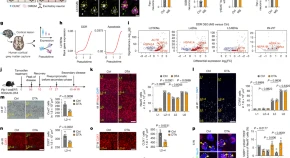
DNA damage burden and inadequate repair in CUX2+ cortical layer 2/3 excitatory neurons contributes to selective vulnerability in neuroinflammatory injury.
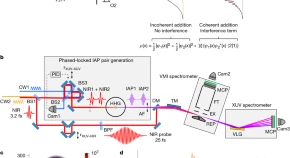
Dissociative ionization of H2 molecules by the combination of a phase-locked attosecond laser pair and a few-cycle NIR laser shows that ion–photoelectron entanglement influences electronic coherence in H2+, allowing control over the degree of entanglement by varying the delay between the pulses.
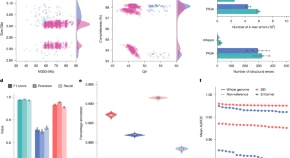
Development of the pangenome-informed genome assembly (PIGA) workflow enabled the generation of 1,116 diploid genome assemblies (55 de novo and 1,061 pangenome-informed), representing an extensive resource of medically relevant genic variations.
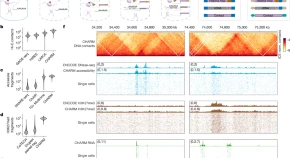
Combining single-cell parallel profiling of genome conformation, histone modifications, chromatin accessibility and gene expression reveals dynamics and intranuclear spatial clustering of epigenome profiles, enabling sophisticated analysis of the regulatory landscape across cell types and tissues.
Findings suggest that neural crest fate bias predominantly emerges within the neural tube, and that only a minor subset of delaminated progenitors retain multipotency to generate both sensory and sympathetic derivatives.
Longitudinal tracking of mice reveals that stable, specialized social roles emerge spontaneously within groups during a foraging task, with dopaminergic activity in the ventral tegmental area driving sex-divergent patterns of specialization.
N-desethyl-fluornitrazene is a µ-opioid receptor agonist derived from nitazenes that has supramaximal intrinsic efficacy that produces analgesia with minimal adverse effects in rodent models.
Researchers created a moiré superlattice in Sb2Te3/FeTe bilayers, producing spatially modulated superconducting gaps directly imaged with Josephson scanning tunnelling microscopy and spectroscopy, tunable by replacing Sb2Te3 with Bi2Te3.
Long-range interactions mediated by protein electric dipole moments have a role in driving the assembly and disassembly of super-signalling complex I for promoting NF-κB signalling.
LIGO–Virgo–KAGRA’s fourth Gravitational-Wave Transient Catalog shows evidence of a clear pair-instability gap in the distribution of binary black-hole secondary masses but is absent in the larger primary masses.
The transcription factor ATF4 is shown to regulate double-stranded DNA repair within vulnerable CUX2+ upper-layer 2/3 cortical neurons, enabling their survival during development.
AhR functions as a neuronal brake on axon regeneration, integrating environmental sensing, protein homeostasis and metabolic signalling to control the balance between stress adaptation and axonal repair.
In-flight observations show that the use of lean-burn combustion succeeds in reducing soot emissions from aircraft—yet contrail ice crystals still form and nucleate on volatile particles.
A study of reproducibility in a stratified random sample of 600 papers published from 2009 to 2018 in 62 journals spanning the social and behavioural sciences finds higher reproducibility among more recent papers and papers from journals that require data sharing.
Analysis of FeTe films grown using molecular-beam epitaxy and annealed under a Te flux post-growth shows that stoichiometric FeTe is inherently a superconductor, contradicting the long-held view that it is an antiferromagnetic metal.
A large-scale study on the replicability of claims from social and behavioural science journals reports that about half of the results replicate in the same patterns as the original study.
A dual-action force dynamics strategy using a hard silicon template as a nanoimprinting stamp combined with inverted transfer printing is described for the manufacture of high-performance full-colour ultrahigh-resolution quantum dot light-emitting diodes (LEDs) for active-matrix displays, while revealing electric-field reconstruction in nanoscale arrays and introducing dielectric matching to mitigate field concentration and performance degradation.
Superconductivity in twisted bilayer WSe2 evolves smoothly with twist angle and emerges near Fermi surface reconstruction, linking previously distinct phase diagrams and clarifying its correlated origin.
The rate of axon ensheathment varies within individual myelinating processes, resulting in chains of myelin sheaths connected by bridges consisting of thin cytoplasmic processes that provide flexibility for myelination of highly branched axons.