
Have you ever noticed that there's a new Spider-Man with a new star every few years? And ya, there are lots of Marvel movies all the time, but the actors behind the characters tend to stay the same. Robert Downey Jr. is Iron Man/Tony Stark. Chris Evans is Captain America. Chris Hemsworth is Thor. Meanwhile…
- Tobey Maguire's first Spider-Man was released in 2002. He returned for sequels in 2004 and 2007.
- Then, just five years later, the whole franchise was rebooted with Andrew Garfield in 2012. Garfield got another movie in 2014.
- Three years after that, Tom Holland stepped into the suit. Holland returned for standalone sequels in 2019 and 2021, and now, in 2026, he's back again in "Spider-Man: Brand New Day."
So what's going on? Why is Spider-Man managed so differently from all the other Marvel characters? Well, there's an interesting explanation.
First off, Marvel doesn't actually have the right to make Spider-Man movies. Sony does. Even stranger, due to a quirky contract rule, Sony is basically required to make a new movie… every three-ish years.
Here's the deal:
As you may know, today Marvel is owned by Disney. Disney acquired Marvel in 2009 for $4 billion, and the Marvel Cinematic Universe has gone on to generate over $30 billion at the box office for Disney.
But, back in the mid-1990s, Marvel was such a bad business that it actually had to file for bankruptcy. Marvel filed for bankruptcy in December 1996. Two years after it emerged from bankruptcy, desperate for cash. So, in 1999, Marvel struck a deal with Sony. The deal gave Sony the exclusive right to make movies based on the Spider-Man character. Not the rights to the character. Just the rights to make movies based on the character.
And here's the catch: Sony loses the rights if it stops making Spider-Man movies.
Sony literally has to produce qualifying movies on a specified timetable. Under the general rule in that agreement, Sony must begin production on another qualifying Spider-Man movie within three years and nine months of the previous film and release one within five years and nine months.
There are some nuances, but the practical effect is pretty clear: Sony can't just stick Spider-Man on a shelf for a decade and come back whenever it feels like it.
That helps explain something that has always been unusual about Spider-Man. The franchise keeps coming back. When one version runs its course, Sony doesn't necessarily wait around for audiences to become nostalgic. It finds another way forward. Maguire gave way to Garfield. Garfield gave way to Holland. And Holland has now become the most valuable Spider-Man of them all.
Which brings us to an absolutely fascinating bit of leverage.
Tom Holland's original Spider-Man contract expired after 2021's "Spider-Man: No Way Home." By that point, the movie had grossed nearly $2 billion worldwide. Holland was no longer the relatively unknown teenager Sony and Marvel had hired for $250,000 to make a brief appearance in "Captain America: Civil War." He was the face of arguably Sony's most important movie franchise.
That left Sony in an awkward position. Its previous Holland-led movie had just generated nearly $2 billion. And the actor audiences associated with that success was suddenly a free agent who needed a new contract.
Sure, Sony could have chosen to go with a new lead actor, as it had done many times before, but that's an enormous risk on a very tight timeline. Meanwhile, Tom Holland was ready, willing, and available. He was still the perfect age for the role, a fan favorite, and was becoming one of the most famous celebrities in the world, thanks in no small part to his relationship with Zendaya.
This gave Tom quite a bit of leverage. And boy did he use that leverage well.
According to a new exclusive report from TheWrap, thanks to a combination of a huge upfront salary and an unusually lucrative backend deal tied to the movie's performance, Tom Holland will almost certainly earn $100 million from "Spider-Man: Brand New Day."
Uncapped Backend
According to TheWrap, Holland received a base salary of at least $20 million for "Spider-Man: Brand New Day." That's already roughly double the $10 million he reportedly earned for "Spider-Man: No Way Home."
But the upfront salary isn't where the really enormous money comes from.
When Holland negotiated his new Spider-Man contract following "No Way Home," his representatives reportedly secured a backend arrangement that allows him to earn additional compensation based on the movie's financial performance. Most importantly, Holland's backend is uncapped. In other words, his bonuses don't simply stop after reaching a predetermined maximum.
That distinction has turned out to be extremely valuable.
"Spider-Man: Brand New Day" has already passed $2 billion at the worldwide box office, becoming only the eighth movie in history to cross that threshold. Deadline and The Hollywood Reporter have independently confirmed the $2 billion milestone.
With the movie still generating theatrical revenue, one source familiar with Holland's deal told TheWrap that he will make "at least" $100 million. That alone is enough to be one of the five largest acting paydays in Hollywood history. If he earns a bit more than $100 million, Tom will own the record for the second-largest acting payday in Hollywood history. If he manages to make $120 million plus one dollar, he'll set the record. Here are the current standings for the six largest acting paydays in history:
- Bruce Willis "The Sixth Sense" $120 million
- Tom Cruise "Top Gun: Maverick" $100 million
- Tom Cruise "Mission: Impossible II" $100 million
- Tom Cruise "War of the Worlds" $100 million
- Will Smith "Men in Black 3" $100 million
- Sandra Bullock "Gravity" $77 million
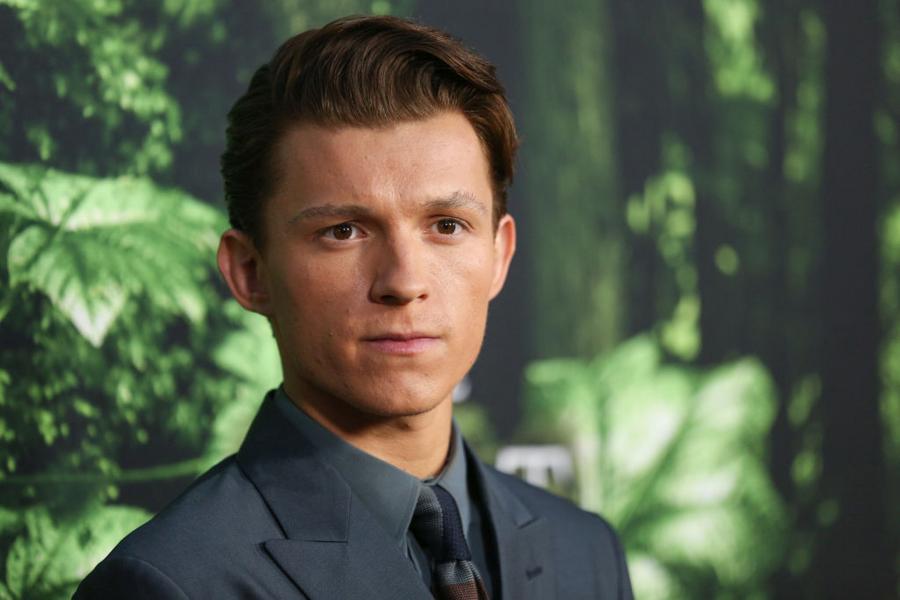
Rich Fury/Getty Images
From $250,000 To $100 Million
The progression is pretty staggering.
- Holland made his MCU debut as Peter Parker in 2016's "Captain America: Civil War." According to TheWrap, his compensation for that appearance was just $250,000.
- For 2017's "Spider-Man: Homecoming," Holland's base salary increased to $500,000.
- For 2019's "Spider-Man: Far From Home," he earned $4 million.
- For 2021's "Spider-Man: No Way Home," he reportedly earned $10 million.
- Then came "Brand New Day": at least $20 million upfront and potentially more than $100 million in total compensation.
So, in the span of ten years, Holland's Spider-Man compensation went from $250,000 to potentially more than $100 million. That's a 400-fold increase.
And in hindsight, Sony didn't have much leverage when it came time to renegotiate.
Holland's original Spider-Man contract expired after "No Way Home." By that point, he wasn't an unknown 19-year-old actor hoping to land a life-changing role. He was the face of one of the most successful franchises in movie history.
"Spider-Man: No Way Home" had earned nearly $2 billion worldwide. Sony and Marvel wanted another Holland-led Spider-Man movie. Holland knew exactly how valuable he had become.
His representatives negotiated accordingly.
The Robert Downey Jr. Playbook
If this story sounds familiar, that's because another Marvel star followed an extremely similar path.
Robert Downey Jr. was paid just $500,000 for the original "Iron Man" in 2008. As the Marvel Cinematic Universe became a global juggernaut, Downey renegotiated his contracts to include increasingly valuable backend participation.
Those backend deals ultimately became far more important than his base salaries.
The Hollywood Reporter previously reported that Downey earned around $75 million from "Avengers: Infinity War" after backend compensation, while his Marvel earnings over the years grew into hundreds of millions of dollars. Downey has earned between $500 million and $600 million from Marvel over the course of his career.
It's easy to see the resemblance. The studios initially get a talented actor relatively cheaply. The actor becomes indispensable to a multibillion-dollar franchise. His original contract expires. Then the leverage flips dramatically in his favor.
/2017/07/spider.jpg)
/2017/06/GettyImages-82639809.jpg)
/2015/04/morgan.jpg)
/2019/12/GettyImages-1140470739.jpg)
/2010/01/Robert-Downey-Jr.jpg)
/2014/03/Sandra-Bullock.jpg)
/2020/01/lopez3.jpg)
/2019/11/GettyImages-1094653148.jpg)
/2009/09/Cristiano-Ronaldo.jpg)
/2019/04/rr.jpg)
/2018/03/GettyImages-821622848.jpg)
/2017/02/GettyImages-528215436.jpg)
/2020/04/Megan-Fox.jpg)
/2020/06/taylor.png)
:strip_exif()/2009/09/P-Diddy.jpg)
/2020/02/Angelina-Jolie.png)
/2009/09/Jennifer-Aniston.jpg)
:strip_exif()/2015/09/GettyImages-476575299.jpg)
/2009/09/Brad-Pitt.jpg)
/2019/10/denzel-washington-1.jpg)
/2009/11/George-Clooney.jpg)